EMT Practice Test

1. Question Content...


Question List

Question1: Which interface type is used to monitor traffic and cannot be used to perform traffic shaping?

Question2: Which two App-ID applications will need to be allowed to use Facebook-chat? (Choose two.)

Question3: Which administrator type utilizes predefined roles for a local administrator account?

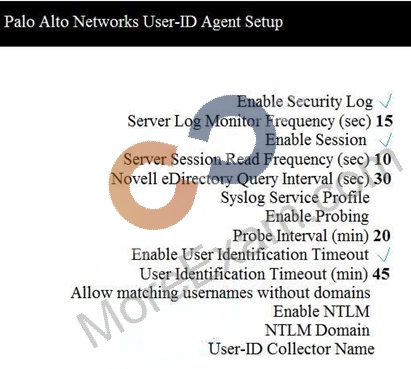
Question4: Which two configuration settings shown are not the default? (Choose two.)
Question5: In the example security policy shown, which two websites would be blocked? (Choose two.)

Question6: An administrator receives a global notification for a new malware that infects hosts. The infection will result in the infected host attempting to contact a command-and-control (C2) server. Which two security profile components will detect and prevent this threat after the firewall's signature database has been updated?
(Choose two.)

Question7: An administrator needs to allow users to use their own office applications. How should the administrator configure the firewall to allow multiple applications in a dynamic environment?

Question8: Which data-plane processor layer of the graphic shown provides uniform matching for spyware and vulnerability exploits on a Palo Alto Networks Firewall?

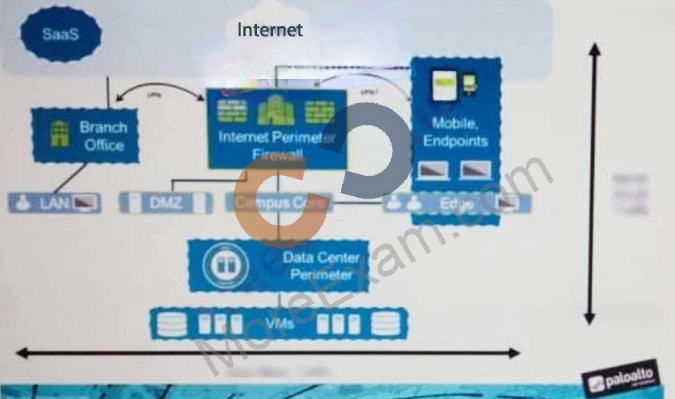
Question9: An administrator notices that protection is needed for traffic within the network due to malicious lateral movement activity. Based on the image shown, which traffic would the administrator need to monitor and block to mitigate the malicious activity?

Question10: Which file is used to save the running configuration with a Palo Alto Networks firewall?
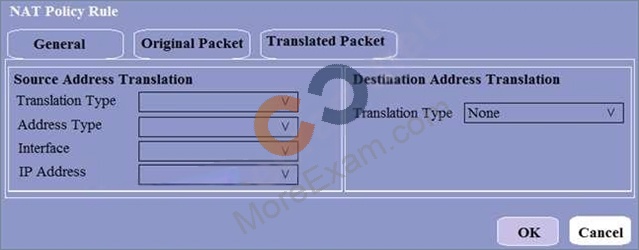
Question11: When creating a Source NAT policy, which entry in the Translated Packet tab will display the options Dynamic IP and Port, Dynamic, Static IP, and None?

Question12: Which interface does not require a MAC or IP address?

Question13: How many zones can an interface be assigned with a Palo Alto Networks firewall?

Question14: Identify the correct order to configure the PAN-OS integrated USER-ID agent.
3. add the service account to monitor the server(s)
2. define the address of the servers to be monitored on the firewall
4. commit the configuration, and verify agent connection status
1. create a service account on the Domain Controller with sufficient permissions to execute the User- ID agent